Fire collars and pipe wraps
Plastic pipes melt in a fire. Collars and wraps close the hole they leave behind.
- Every seal labelled and photographed
- BM TRADA / FIRAS-certificated contractors
- Written price before any work
Grey PVC soil stacks, white waste pipes, black polypropylene vents. Every block of flats in Bristol has plastic pipes going through its floors, and every one of them needs something more than mastic round it. In a fire plastic softens and burns away in a few minutes, leaving whatever was packed round it surrounding an empty hole. A collar is a steel band lined with intumescent material that swells when hot, squeezes the soft pipe shut and plugs the hole. A wrap does the same from inside the wall or floor.
The choice comes from the manufacturer's test. Pipe material, outside diameter, soil or waste or vent, wall or floor, what that wall or floor is made of and how many minutes it has to hold. A collar tested on a 110mm PVC soil pipe in a 150mm concrete slab has not been tested on the same pipe through a timber floor in a converted Clifton house.
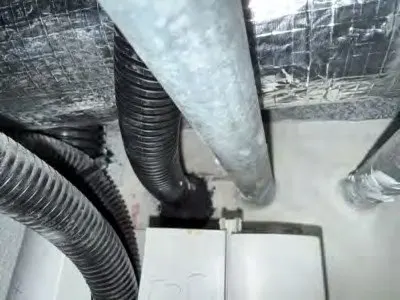
Where we find missing collars
The most common place is the soil stack in the riser of a block of flats, where each flat's waste joins the stack and the stack passes down through every floor. Next are the boxed-in pipes in bathrooms of converted houses, where the pipe runs from one flat to the one below inside a plasterboard boxing. Kitchen and bathroom refits are a frequent cause. A plumber replaces a section of pipe and the original collar comes off and never goes back on.
Fitting
On a concrete floor a collar is normally fixed to the underside, around the pipe, with steel anchors into the slab. On a wall it is often fitted on both faces. Wraps sit inside the thickness of the wall or floor. In every case the contractor follows the fitting detail from the test evidence, and the job is carried out by our BM TRADA / FIRAS-certificated contractors. Each collar or wrap gets a numbered label and a photo, so anyone checking later can see what was fitted and match it to the product data.
Send us the postcode, the number of floors and the page of the assessment that mentions it. We come back with what it needs and a written price.