Fire stopping in Yate
Walls between units, trays through blockwork and roof voids that run the length of a terrace.
- Every seal labelled and photographed
- BM TRADA / FIRAS-certificated contractors
- Written price before any work
Yate grew quickly from the 1950s and 1960s, and alongside the housing it has a lot of industrial estates and trade units. Fire stopping in that kind of building is a different job from fire stopping in flats. The wall between two units is often a compartment wall, built in blockwork up to the underside of the roof, and it is meant to stop a fire in one business reaching the next.
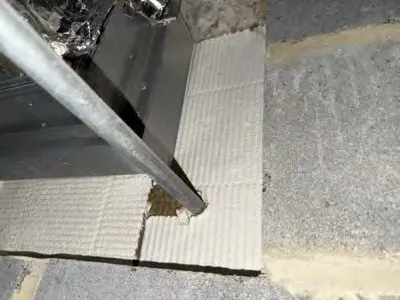
The holes in those walls come from the tenants. A new three-phase supply run through to the next unit. A compressed air line. Cable tray carrying data and power across the top of the wall. A gap at the top of the blockwork where it meets the profiled metal roof, which is hard to seal because of the shape of the sheeting. Each of those needs a product tested for a blockwork wall and for that service, and the profiled roof needs filler blocks or a tested profile seal cut to the shape of the sheet.
In the shops and offices around the town centre, the risks are more like those in flats: holes through the floor between the shop and the rooms above, and ceiling voids that run over the top of partition walls.
If you rent a unit, check your lease before anything is done. The landlord may be responsible for the compartment walls, or it may be you. Either way, our BM TRADA / FIRAS-certificated contractors can survey the walls and seal them, and the work can be timed around the business so nobody has to stop trading.
Send us the postcode, the number of floors and the page of the assessment that mentions it. We come back with what it needs and a written price.